Tuesday, June 29, 2021

How to Create Skin Care Routine on a Budget

When you think of starting a routine to take care of your skin, many questions come to your mind about beauty products, their cost, their effect etc. You need to keep in mind that it is not the high-price of a beauty product that makes it beneficial but the efficiency. By following a healthy regime of Cleansing-Moisturizing-Treating, you take care of your skin on a budget and keeping your skin healthy. By limiting the number of beauty products you use, you can keep your budget under control as using several products can increase the cost.
skin-care-routine

1.Cleansing

It is the most basic step of a good skincare routine. You must clean up your skin before applying any product and even before going to bed at night. A gentle cleanser will help you to get rid of clogged pores. The trick here is to avoid cleansing too much or too often.

2.Moisturize

To get the most, you must apply your moisturizer to damp skin. Moisturizer makes you look brighter and younger by trapping water in the skin. It helps to strengthen your natural skin barriers. Remember to reapply it every two hours or immediately after sweating and swimming.

3.Protection against the Sun

It is an important part of taking care of your skin. Sunscreen helps you to prevent age spots, wrinkles and even skin cancer. You should apply sunscreen to all the exposed parts of your body, even when you are home.

4.Dual Function Products

To keep your skin care budget under control it is necessary to use products which serve dual purpose, like moisturizer with sunscreen. Another example is Petroleum Jelly, this is an inexpensive and handy product that serves several purposes such as chapped lips, cracked heels, rough knees.

skin-care-routine

Another way to simplify the skincare routine and save smartly is to be in touch with a dermatologist. Choosing someone like Dr Priya J Talageri can not only help you understand what your skin requires, but also save you from spending unnecessarily. As everyone’s skin is different, her guidance will help you deal with your skin type and age.

co tact-us

Blog Reviewed By: Dr. Priya J Talageri

Mail Us: info.drpriyaskinandhairclinic@gmail.com 

Book an Appointment: drpriyaskinandhairclinic.com/book-an-appointment


Thursday, February 4, 2021

Can One Go For Peel and Laser Together?

Looking in the mirror, most of us wish to reclaim back our skin’s youthful glow. The ever advancing cosmetic dermatology has made it possible to recapture your younger appearance. Skin therapy combining laser treatment and chemical peel has shown success to obtain a smoother, tighter and wrinkle-free face with an even skin tone.  A full facial rejuvenation can be achieved by combining these procedures. The combination of chemical peels with laser resurfacing is safe and effective for all skin types with long-term benefits.


How does this combination work?

Skin resurfacing with laser pulses energy into the deeper layers of the skin to stimulate new collagen production. This helps to minimize the appearance of fine lines, wrinkles, and scars. Collagen helps to remodel the skin to improve its texture, firmness, and reduces pigmentation. The chemical peel contains ingredients that further stimulate collagen build up, helps in deep exfoliation and provides antioxidants that help to brighten up the skin.

When the chemical peel is applied after laser therapy, the ingredients of the peel penetrate deeper into skin through the controlled injury sites created by the laser. Due to this, the benefits are more enhanced with visible improvement in skin tone and texture.

Summarizing the Advantages of Combination Therapy

  •     Get multiple skin benefits by utilizing the unique benefits of each treatment together
  •     Time saving
  •     Revitalized appearance in no time
  •     Reduced number of hospital visits
  •     Reduced recovery time
  •     Long lasting results
Blog reviewed by: Dr. Priya J Talageri
Mail Us: info.drpriyaskinandhairclinic@gmail.com 
Book an appointment: drpriyaskinandhairclinic.com/book-an-appointment

Monday, November 23, 2020

Scalp psoriasis vs Seborrheic dermatitis

Is itchy and flaky scalp bothering you? Before you jump into the conclusion that it's dandruff, it is important to know the exact cause of your scalp skin to flake off. Scalp psoriasis and seborrheic dermatitis (dandruff) share some similar signs and thus, treating your scalp with unsuitable remedies may worsen the condition. Here are some of the key differences between these conditions:

Seborrheic dermatitis may last for a while and may come back while scalp psoriasis is a chronic condition which may stay for a longer time.

Seborrheic dermatitis appears white and flaky while in scalp psoriasis, along with flaky scalp, there can be thick red and inflamed skin patches. The skin becomes very dry, cracked and sometimes bleeds.

Seborrheic dermatitis does not spread to areas other than the scalp. It may sometimes cause forehead acne and back acne. Psoriasis, on the other hand, can spread to other parts like the forehead, back of your neck & skin around the ears.

Seborrheic dermatitis can be caused due to multiple factors like fungus, hair care products, hormonal levels etc. but scalp psoriasis is an autoimmune disorder which triggers overproduction of skin cells on the scalp. The trigger factors can be stress, extreme temperatures and infectious illnesses.

Coming to the treatment aspect, seborrheic dermatitis is usually treated with medicated shampoos while scalp psoriasis is treated with topical creams, ointments, etc. which contain vitamins and steroids to control the inflammation. Phototherapy using UV light is also recommended in some cases.

The scalp itchiness and flaking can be due to either of the two conditions which we have discussed in detail. If over-the-counter treatments do not work, take an immediate appointment with our dermatologist so that the condition can be examined closely and appropriate medications can be given.

Blog reviewed by: Dr. Priya J Talageri
Mail Us: info.drpriyaskinandhairclinic@gmail.com 
Book an appointment: drpriyaskinandhairclinic.com/book-an-appointment

Wednesday, July 8, 2020

Dark skin around neck-causes-symptoms-treatments

Dark skin around the neck, a.k.a. Acanthosis Nigricans (AN), is a skin condition where parts of the human body which fold and crease, become dark and velvety and eventually thicken. Though they can appear anywhere on the body, they are most common in the neck, armpits and groin. This is common among people who have diabetes and/or are obese. In children, this is a possible sign of type 2 diabetes in the future.


Causes:

This skin condition is often associated with:
  1. Some types of drugs and supplements like birth control pills, steroids and high doses of niacin or vitamin B3.
  2. Hormonal disorders like ovarian cysts, adrenal gland problems or underactive thyroid gland.
  3. Resistance to insulin. Insulin, secreted by the pancreas, allows the body to process sugar, and resistance to insulin eventually leads to type 2 diabetes.
  4. Cancer. This condition also occurs when a cancerous tumour begins growing in an internal organ like the liver, colon or stomach. 
  5. Obesity and genetics are also important factors. 
Symptoms:
  1. Moderate to severe itching in the affected areas.
  2. Skin colouration can change into either brown or black.
  3. It has a velvet-like feel and is thicker than the surrounding area.
  4. Sometimes there may be a bad odour, too.
Diagnosis:
Generally, a visual skin exam is all that may be necessary. But, sometimes a small skin sample may be taken for a lab test. If the causes of AN are still unclear, then blood tests, X-rays and other tests may be advised.

Treatment:

In most cases, simply treating the underlying causes can lead to the discolouration fading away. This could involve losing weight, stopping the drugs and supplements that are being used. If the AN is caused because of a cancer tumour, then surgery to remove the tumour may be necessary.

If the skin becomes uncomfortable and/or the appearance and odour is not acceptable, then the doctor may prescribe topical antibiotics; skin-softening cream; antibacterial soap.


As Acanthosis Nigricans usually takes months or years to form and appear, if it appears very suddenly, one should immediately consult with a specialist.

Blog reviewed by: Dr. Priya J Talageri
Mail Us: info.drpriyaskinandhairclinic@gmail.com 
Book an appointment: drpriyaskinandhairclinic.com/book-an-appointment

Monday, June 22, 2020

Applications of Minoxidil

Minoxidil is a medication, usually in the form of a solution or foam, used to help hair growth in the treatment of a kind of hair loss called Male Pattern Baldness. It is not used for the treatment of receding hairline or frontal baldness in men and persons below 18 years of age are advised NOT to use it. Those who can use it may have to use it indefinitely for maintenance of existing hair growth and support of existing follicles. And it can start at any age for both sexes.


Though this is called Male Pattern Baldness, women are also affected by it, at least one third it is believed. And it has a greater social impact on them than in men. However, unlike men, women’s hairline does not recede or go completely bald. But, there is a noticeable thinning of the hair

In both the cases, this type of hair loss occurs because of a genetically determined shortening of the Anagen, hair’s growth phase and the lengthening of the time between hair shedding and the start of a new growth phase.

Some common side effects include: irritation or redness of the eye; itching of the treated area; unwanted hair growth in areas not under treatment; allergic reactions have also been noted in some people. In some cases, it has also been seen to induce hair loss rather than growth.

Weird Fact: Minoxidil was developed in the late 1950s by the Upjohn Company; later a part of medical giant Pfizer; as a treatment for ulcer. It was officially approved for the treatment of hair loss only in 1988 and an over-the-counter drug in 1996.
The medication and application are the same for both men and women.

Application as a topical foam:
  • Expose the thinning part of the scalp by parting the hair into one or more rows
  • Transfer the foam from the container onto the fingers and gently massage it into the affected areas of the scalp.
  • Wash your hands immediately to remove any residual foam.
  • Do not blow-dry your hair as it makes Minoxidil less effective.

Application as a topical solution:
  • Make sure the hair and scalp are dry and apply the solution in the prescribed amount only using the supplied applicator.
  • Do not shampoo for 4 hours.
  • If going to bed, wait for the Minoxidil to dry, at least 3 to 4 hours.
  • Avoid transferring wet solutions to other parts of the body.
  • Wash your hands to remove residue.
  • Do not apply on irritated, sunburned or worn skin.
  • Do not blow-dry here also.


Dosage varies from person to person. Follow your doctor's instruction strictly.
For more details, book your appointments- https://www.drpriyaskinandhairclinic.com/book-an-appointment


Blog reviewed by: Dr. Priya J Talageri
Mail Us: info.drpriyaskinandhairclinic@gmail.com 
Book an appointment: drpriyaskinandhairclinic.com/book-an-appointment

Thursday, January 23, 2020

Can You Wear Makeup After Laser pigmentation removal?

Good looking skin is everybody's dream. Any disorders that damage the natural beauty of the skin can pull you back from this dream. Skin pigmentation is such a skin disorder that makes your skin lose its natural smoothness and attraction. 

 Laser pigmentation removal

There are several home remedies and over the countermeasures available. However, none of them provide a permanent result. A laser pigmentation method is proved to be effective in reducing the visible signs of freckles, sun spots, age spots, etc., from your face and body. 

What is Laser pigmentation removal?

Laser pigmentation removal is the procedure of removing pigmentation and redness using a laser. This procedure is also known as laser skin rejuvenation. The laser is targeted directly on the pigmented lesion in the skin. These pigmented lesions then absorb this laser beam in the skin, thus shattering them into tiny fragments, and the body's natural mechanisms clear away the pigmentation, thus leaving the skin with an even tone and complexion. 

Can You Apply Makeup After The Procedure?

People often have a query on using makeup after a laser skin rejuvenation treatment. Experts recommend that it is best to keep your skin makeup-free for 7 to 10 days after the treatment. This is because the procedures have created microscopic wounds in the layers of the skin where the imperfections lay. It will take time to heal these wounds. Using makeup immediately after the treatment can slow down the healing process.

You can start using basic foundations after 10 days of treatment. Some might experience peeling. So, it is best to wait until the skin stops peeling before applying a foundation. However, it is vital to apply moisture in the treated area, as it can prevent forming scabs and fasten the healing. 

There are a few things you can do to take care of your skin after getting the treatment. They are:
  • Check for reactions
  • Avoid sunburn
  • Minimize redness
  • Reduce swelling
  • Use moisturizer
  • Avoid topical medications & makeup 
 Laser pigmentation removal

Laser treatments are effective for eliminating imperfections of the skin. But, just like every other medication, post-treatment care is essential for long-lasting results. Laser treatments, along with daily skincare routine using the right products, can keep those imperfections away from you for years.


Blog reviewed by: Dr. Priya J Talageri
Mail Us: info.drpriyaskinandhairclinic@gmail.com 
Book an appointment: drpriyaskinandhairclinic.com/book-an-appointment

Monday, December 16, 2019

Laser Treatments for Pigmentation

Pigmentation is terrible for those of us who are affected by it. It's not a pleasant sight to look at as you wake up in the morning. Pigmentation occurs not just in the face but also throughout the body, especially on your arms and feet. It can be all that a woman needs to postpone wearing that sleeveless top or that beautiful evening dress. 

Pigmentation

Before we start, it's best to remind everyone that pigments aren't necessarily bad they are there to protect you. The pigmentation on your skin is designed to protect you from the harmful UV rays of the Sun. You should be thankful that they are there. However, like all things in life the problems arise when these pigments are produced more than is needed, everything becomes undesirable in excess and turns out these pigments are no different.

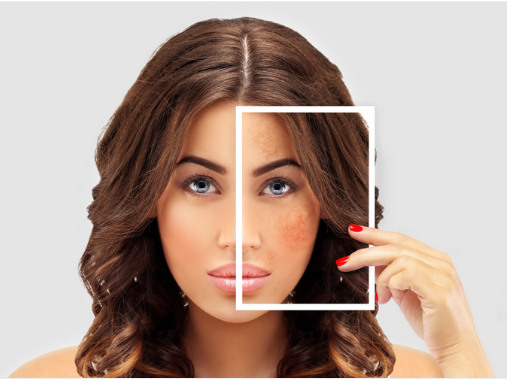
When these pigments get produced in excess, it builds upon your face and possibly other parts of your body causing marks, which can be unattractive, to say the least.

There are many remedies to these problems, however, none are as permanent and as effective as Laser Treatment. It works on almost types of pigmentations, sun spots, melasma, anything that is UV based. 

The lasers work to break down the excess pigments in your skin, thus eliminating the spots. It's a delicate procedure which requires care and expertise. The equipment used also need to e of the highest quality. There are countless cases where a simple miscalibration leads to further complications on the patient's skin.

 pigmentation treatment

If you or anyone you know is suffering from pigmentation, reach out to us and we'll help recommend an appropriate course of action to fix those spots. With our years of experience performing the same kind of procedures, you can rest assured that you are in expert care.


Blog reviewed by: Dr. Priya J Talageri
Mail Us: info.drpriyaskinandhairclinic@gmail.com 
Book an appointment: drpriyaskinandhairclinic.com/book-an-appointment